Holding the Line at 3 A.M.: The ER Doctors Who Never Stop Fighting for the Forgotten
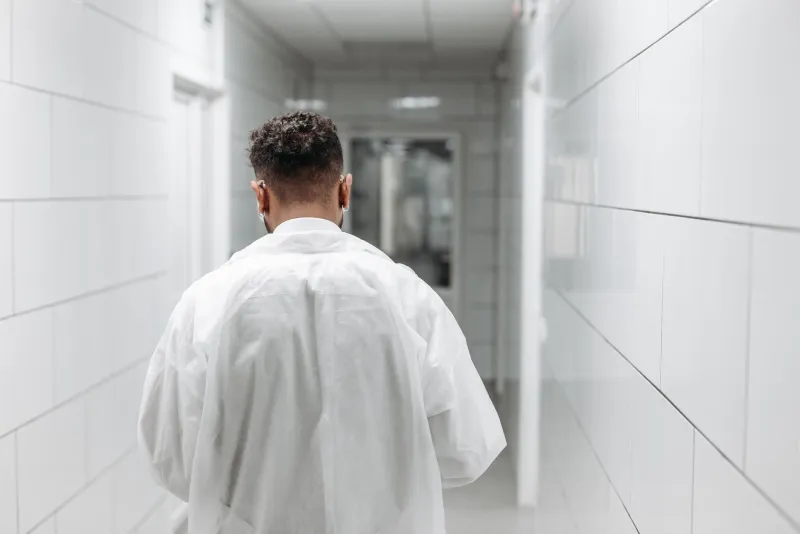
The fluorescent lights never go off in an emergency room. That's the thing people don't always think about — there's no sunset, no closing time, no moment when someone flips the sign to "Sorry, We're Closed." The ER just keeps going. And somewhere in that relentless hum of machinery and urgent footsteps, a specific kind of doctor has chosen to make their home.
They work the graveyard shift. They work in hospitals that other physicians quietly sidestep on their way to cushier gigs in suburban medical centers. And night after night, they are the last line of defense for people who have nowhere else to go.
Why Anyone Would Choose This
Dr. Marisol Vega has been working overnight shifts at a public hospital in South Texas for eleven years. She finished her residency at a well-regarded program in Houston, fielded offers from several well-funded health systems, and turned them all down. "People kept asking me if I was okay," she laughs. "Like I'd made some kind of mistake."
She hadn't. Vega had grown up watching her grandmother navigate a healthcare system that treated Spanish-speaking patients like inconveniences. She'd made a deliberate choice to go where the need was sharpest. "If I'm not here," she says simply, "who is?"
That question — who is? — turns out to be the organizing principle behind a lot of these physicians' lives. They're not martyrs, and most of them bristle at being framed that way. They're pragmatists with a deep streak of idealism, people who looked at a broken system and decided the most useful thing they could do was stand inside it.
The Geography of Darkness
America's healthcare deserts don't follow a single map. They show up in the Mississippi Delta, where the nearest trauma center might be an hour's drive down a two-lane road. They show up in South Side Chicago, where decades of disinvestment have hollowed out entire hospital systems. They show up in rural Appalachia, where a single ER physician might be covering a county the size of Rhode Island.
Dr. Calvin Osei works one of those rural ERs in eastern Kentucky. On a typical Friday night, he might treat a farming accident, a teenager who's overdosed, a stroke victim whose family didn't recognize the signs until it was almost too late, and a child with an asthma attack that got out of hand because her family couldn't afford the preventative inhaler. "You see the whole sweep of what poverty does to a body," he says. "And you either get angry and leave, or you get angry and stay."
Osei stayed. He's been staying for eight years. He coaches youth basketball on his days off and has become, in the way that small-town doctors sometimes do, something close to a community institution. But he's careful not to romanticize it. "I'm not a hero. I'm a doctor. I just happen to work somewhere that needs doctors."
What Compassion Fatigue Actually Looks Like — and How They Fight It
Let's be honest about something: this work is brutal. Emergency medicine has some of the highest burnout rates in the entire medical profession, and working in under-resourced settings compounds every stressor. Inadequate staffing. Outdated equipment. Patients arriving in crisis because they couldn't access preventative care. A healthcare bureaucracy that sometimes seems designed to exhaust the people trying to work within it.
Dr. Priya Nambiar, who splits her time between a safety-net hospital in Baltimore and a mobile crisis unit serving the city's unhoused population, has thought a lot about how she keeps going. "You have to find the moments," she says. "Not the dramatic ones — the quiet ones. The patient who squeezes your hand. The family member who looks at you like you've given them back the world."
She keeps a notebook. Not for clinical notes — she has systems for that — but for what she calls "the good ones." The saves. The moments of unexpected grace. "On the hard nights, I go back and read it. It sounds small. It isn't."
Vega has a different approach. She's built a tight cohort of colleagues — other night-shift physicians scattered across the region — who check in on each other regularly. "We text at weird hours," she says. "Two in the morning, four in the morning. Someone's had a hard case and they just need to say it out loud to someone who gets it." Community, she's found, is the antidote to isolation. Even when that community exists mostly in a group chat.
The Philosophy of the Long Game
What strikes you, talking to these physicians, is how much they think about time. Not just the immediate urgency of the patient in front of them, but the longer arc of what they're doing and why.
Osei talks about his patients' kids — the ones he's treated for ear infections and sports injuries who are now, in some cases, heading to college. "I think about whether they'll come back here," he says. "Whether they'll bring something back to this community. That's not my doing. But I was part of the ecosystem that kept things going long enough for them to get there."
Nambiar thinks about systems change — she's become an increasingly vocal advocate for expanding mobile crisis response and pushing back against policies that criminalize homelessness. "You can't just treat people and send them back to the same conditions," she says. "At some point the ER has to be part of a bigger conversation about why people are showing up in crisis in the first place."
Vega thinks about her grandmother. "She deserved better," she says. "And the people I see every night deserve better. I can't fix everything. But I can make sure that when someone comes through that door at three in the morning, they're treated like a human being. That's the job."
Light in the Waiting Room
There's a particular quality to hope that you find in emergency rooms at 3 a.m. It's not the bright, uncomplicated kind. It's been stress-tested. It's been forced to reckon with loss and failure and the hard limits of what medicine can do. And it's still there — in the doctor who sits down next to a scared patient to explain what's happening, in the nurse who tracks down a warm blanket, in the physician who calls in a favor to get someone connected to a social worker before they're discharged back into the cold.
These doctors didn't choose the easy road. They chose the one that needed them most. And every night, in hospitals that the rest of the system has quietly given up on, they show up and hold the line.
The lights never go off in the ER. That's not a burden. That's the point.