After Midnight, Before Dawn: The Workers Building Beautiful Lives in the Hours Nobody Sees
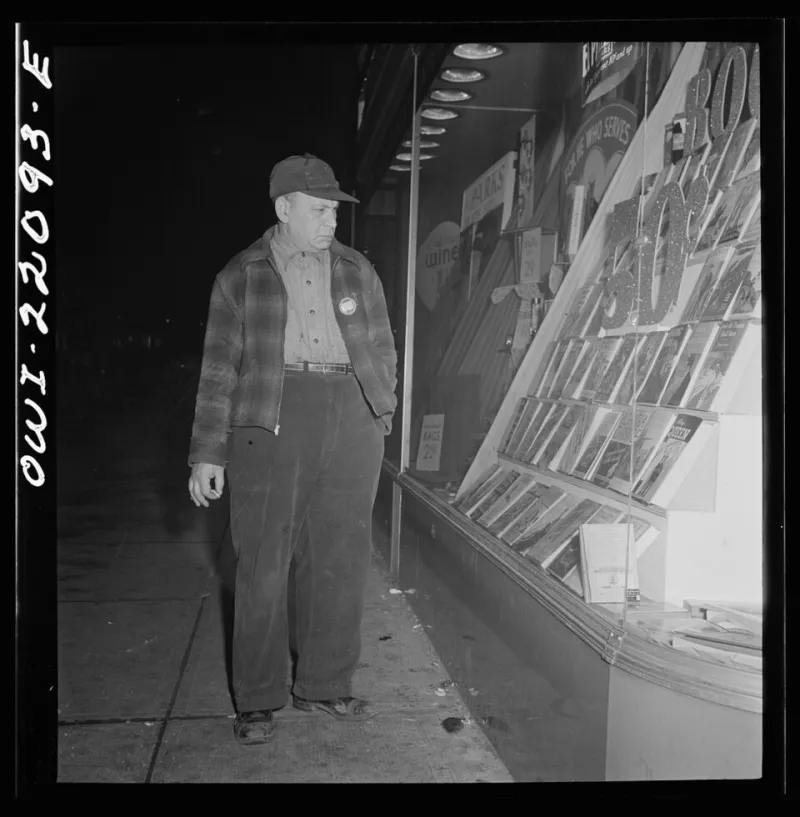
Photo: Marjory Collins, Public domain, via Wikimedia Commons
Somewhere in America right now, a woman is walking off a twelve-hour hospital shift, still in her scrubs, and heading straight to her pottery wheel. A man in Memphis is clocking out of a distribution warehouse at 6 a.m. and opening his laptop to edit the documentary he's been filming on weekends. A security guard in Phoenix is sketching building designs in a notebook she keeps behind the front desk, dreaming of the architecture degree she's working toward one online class at a time.
They are the night shift. And they are anything but asleep on their potential.
Around 15 million Americans work overnight or rotating shifts — a workforce that keeps hospitals humming, grocery shelves stocked, and emergency lines answered while the rest of us dream. The conventional story about these workers leans hard on sacrifice and exhaustion, and look, that part is real. Working against your body's natural clock is genuinely hard. But there's another story running parallel to that one, and it's the one we want to tell.
The Margin Hours
When you work nights, your relationship with time gets weird in ways that are hard to explain to a nine-to-fiver. The afternoon becomes your morning. Tuesday bleeds into Wednesday without a clean break. The grocery store is gloriously empty at 2 p.m. when you're shopping, and the park near your house is practically yours alone on a Wednesday morning.
For some people, those margin hours — the ones that don't fit neatly into the standard social schedule — become unexpectedly fertile ground.
Take Darnell, a 34-year-old overnight stocker at a regional grocery chain in Atlanta. He's been working nights for six years, and for the first two, he'll tell you, he mostly just survived. But then the pandemic hit, everything got quieter, and he started cooking. Really cooking. "I had the kitchen to myself from 7 a.m. to noon every day," he says. "Nobody asking me anything. Just me and whatever I felt like making."
That quiet kitchen habit turned into a catering side business. He's not rich. He's not quitting his day — well, night — job anytime soon. But he feeds people at community events on weekends, and he's building something that's entirely his.
Rewriting the Exhaustion Narrative
Here's what researchers who study shift workers will tell you: yes, circadian disruption is a real health concern, and no, we shouldn't romanticize grueling schedules or inadequate pay. Those systemic issues matter, and advocating for better conditions is part of how communities get stronger.
But resilience doesn't wait for perfect conditions. It never has.
What's striking about the night shift workers who are thriving creatively isn't that they've solved the exhaustion problem — it's that they've found pockets of genuine aliveness inside it. Many describe a kind of clarity that comes with working while the world sleeps. There's less noise, literally and figuratively. Fewer emails. Fewer social obligations. The cultural pressure to be productive in the conventional sense is temporarily lifted, and in that space, something unexpected sometimes grows.
Lorena, a licensed practical nurse in Albuquerque who works nights in a long-term care facility, started a community garden three years ago on a vacant lot near her apartment. She tends it in the mornings after her shifts, when the New Mexico sun is still gentle. "People ask me how I have energy for it," she says, laughing. "I don't, always. But the garden doesn't care. You just show up and do the small thing in front of you."
That garden now feeds about forty families in her neighborhood. It started with one tired nurse and a packet of seeds.
Community in the Dark
One of the quietly beautiful things about night shift culture is the community it builds — often invisible to the rest of society, but tight-knit in ways that day workers might envy.
In cities across the country, overnight workers have formed their own informal networks: the diner where the 6 a.m. crowd is all people getting off work, not going to it. The Facebook groups where night nurses swap recipes and vent about difficult shifts and celebrate each other's wins. The warehouse team that's been together for a decade and knows each other's kids' names and dreams.
These aren't people waiting for daylight to start living. They've built their own version of daylight.
Marcus, a 41-year-old hotel night auditor in Chicago, has been running a small online music production community for fellow night shift workers for two years. Members share beats, collaborate on tracks, and offer feedback during the hours when the rest of the music world is offline. "We joke that we're the after-hours label," he says. "But honestly, some of the best stuff is coming out of this group."
What They're Teaching the Rest of Us
There's something the night shift knows about resilience that the rest of us could stand to learn: you don't always get to choose your circumstances, but you get to choose what you build inside them.
The midnight gardeners — and the overnight artists, the graveyard-shift entrepreneurs, the 3 a.m. students — aren't succeeding despite the darkness. They're succeeding in it, with it, sometimes because of it. They've learned to find the light in the margins, to grow things in the hours nobody's watching.
That's not a small thing. That's actually the whole thing.
If you know someone working nights, maybe tell them that. And if you're one of them — clocking out into a sunrise that the rest of the world slept through — know that we see you. You're not invisible. You're just working a different shift than the spotlight.
And the things you're building? They're going to matter.