Between the Lines: How Books Are Quietly Rewriting Lives Behind Bars
There's a particular kind of quiet that settles over a prison library on a Tuesday afternoon. It's not the silence of emptiness. It's the silence of concentration — of people doing the hard, interior work of becoming someone new.
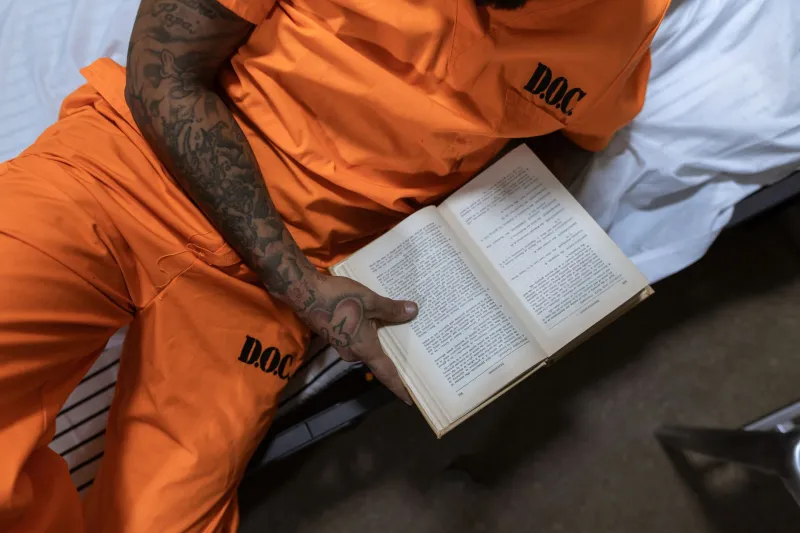
In facilities from California to Georgia, small groups of incarcerated men and women are gathering around dog-eared paperbacks and library copies with cracked spines, leading each other through conversations that most of us would struggle to have in the comfort of our own living rooms. No outside facilitator stands at the front of the room. No college professor holds the syllabus. The educators here are the readers themselves.
And what they're building, one chapter at a time, is something that statistics alone can't fully capture.
Who's Running the Circles?
Prisoner-led reading programs operate differently from the outside-in literacy initiatives that most people picture when they think about education behind bars. In these circles, incarcerated participants take on the role of discussion leaders, mentors, and sometimes curriculum designers — choosing texts, crafting questions, and guiding their peers through material that ranges from James Baldwin to Viktor Frankl to Octavia Butler.
At a medium-security facility in Ohio, one participant — who asked to be identified only by his first name, Marcus — has been running a weekly reading group for three years. He started it after finishing The Autobiography of Malcolm X and realizing he had nowhere to put everything it stirred up inside him.
"I needed to talk about it," he says. "And then I realized other guys needed that too. We'd never really had a space to think out loud together."
What began as four men sitting at a table with a single borrowed copy has grown to a group of nearly twenty, with a rotating list of titles and a waiting list to join.
Literature as Mirror, Literature as Door
There's a reason these circles keep forming organically, even in facilities where resources are thin and programming is inconsistent. Books do something that few other interventions can replicate: they offer a reader the experience of being fully inside another person's consciousness.
For people who have spent years being defined by a single moment — a crime, a conviction, a sentence — that experience of inhabiting another perspective can be quietly revolutionary.
"I read Their Eyes Were Watching God and I cried for the first time in maybe ten years," says Denise, currently incarcerated in a women's facility in Texas. "Not because it was sad. Because I recognized myself in a character for the first time. Like, she was a whole person. And I thought — am I still a whole person?"
The answer that literature kept offering her was yes. Complicated, messy, contradictory, growing — but yes.
Denise now co-leads a reading circle focused on works by women of color. She says the group has become the most honest conversation she's had in years. "We're not performing for anyone. We're just reading and talking and figuring things out together."
The Recidivism Numbers Tell Part of the Story
Researchers who study correctional education have long noted the connection between sustained literacy engagement and reduced rates of reoffending. A landmark RAND Corporation study found that incarcerated people who participate in educational programs are significantly less likely to return to prison after release. More recent work has begun to look specifically at peer-led programming, and the early results are striking.
When incarcerated people take on the role of educator — not just student — something shifts in how they see themselves and their place in the world. Responsibility, it turns out, is its own kind of rehabilitation.
But advocates who work in this space are quick to push back against framing these programs purely in terms of recidivism metrics. "We talk about recidivism because it's the language funders understand," says one program coordinator who works with facilities in the Midwest. "But what we're really talking about is human dignity. We're talking about people discovering that their minds matter."
The Books That Keep Coming Up
Ask participants in prisoner-led reading circles which titles changed them, and certain names surface again and again. Man's Search for Meaning by Viktor Frankl. I Know Why the Caged Bird Sings. The New Jim Crow. Paulo Freire's Pedagogy of the Oppressed. Toni Morrison. Bryan Stevenson's Just Mercy.
The pattern isn't random. These are books about surviving systems that were designed to crush you. Books about finding meaning inside circumstances you didn't choose. Books that insist on the full humanity of people that society has written off.
"Just Mercy hit different in here," says a participant in a Louisiana facility who goes by Dre. "Because Bryan Stevenson is talking about people like us. Not about us from the outside. And he's angry and hopeful at the same time. That's a hard combination to hold. But it's the honest one."
What These Circles Actually Look Like
Forget the image of a formal classroom. These gatherings are looser, warmer, and often louder than you'd expect. Someone brings a passage they underlined. Someone else disagrees with the author. Voices rise. Someone makes a joke. Someone else goes quiet and stares at the table for a moment before saying something that stops the whole room.
The best facilitators — the ones who've been doing this longest — know how to hold that space without filling it. They've learned to ask questions instead of giving answers. They've learned that sitting with uncertainty is a skill, and that it's one worth teaching.
"I learned how to listen in that room," Marcus says. "Really listen. Not just wait for my turn to talk. That sounds small. It's not small."
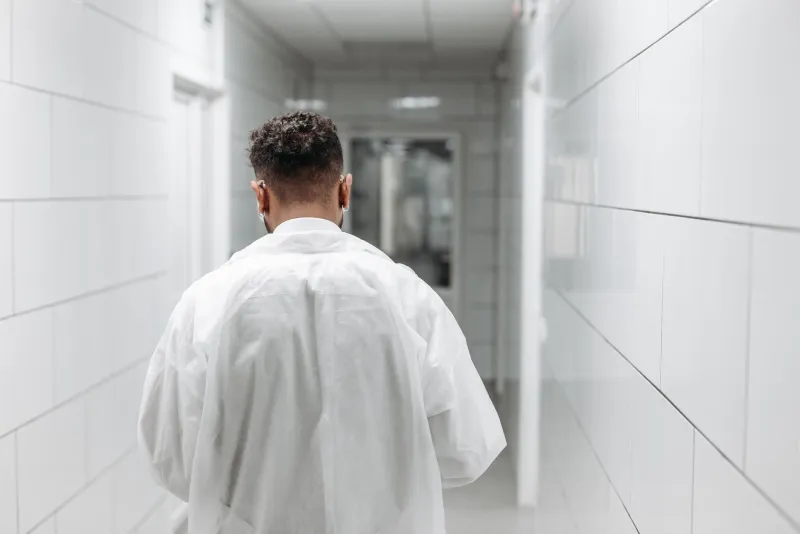
Light in the Long Hallway
There's no clean ending to a story like this one. People in these circles will eventually be released, or they won't. They'll navigate parole and housing instability and the particular cruelty of background check boxes on job applications. The world outside doesn't always make space for the people these reading circles are helping them become.
But something real is happening in those rooms. Something that doesn't wait for permission or policy or a budget line item. Incarcerated readers are reaching toward each other across tables covered in borrowed books, saying: your mind matters, your story isn't finished, there is more to you than your worst day.
That's not a small thing. That's not dark yet.
If you want to support prisoner-led literacy programs, organizations like the Prison Book Program, Books to Prisoners, and the Inside-Out Prison Exchange Program accept donations and volunteers. A paperback costs almost nothing. What it can do inside a correctional facility is harder to measure — and far more valuable than the price on the back cover.